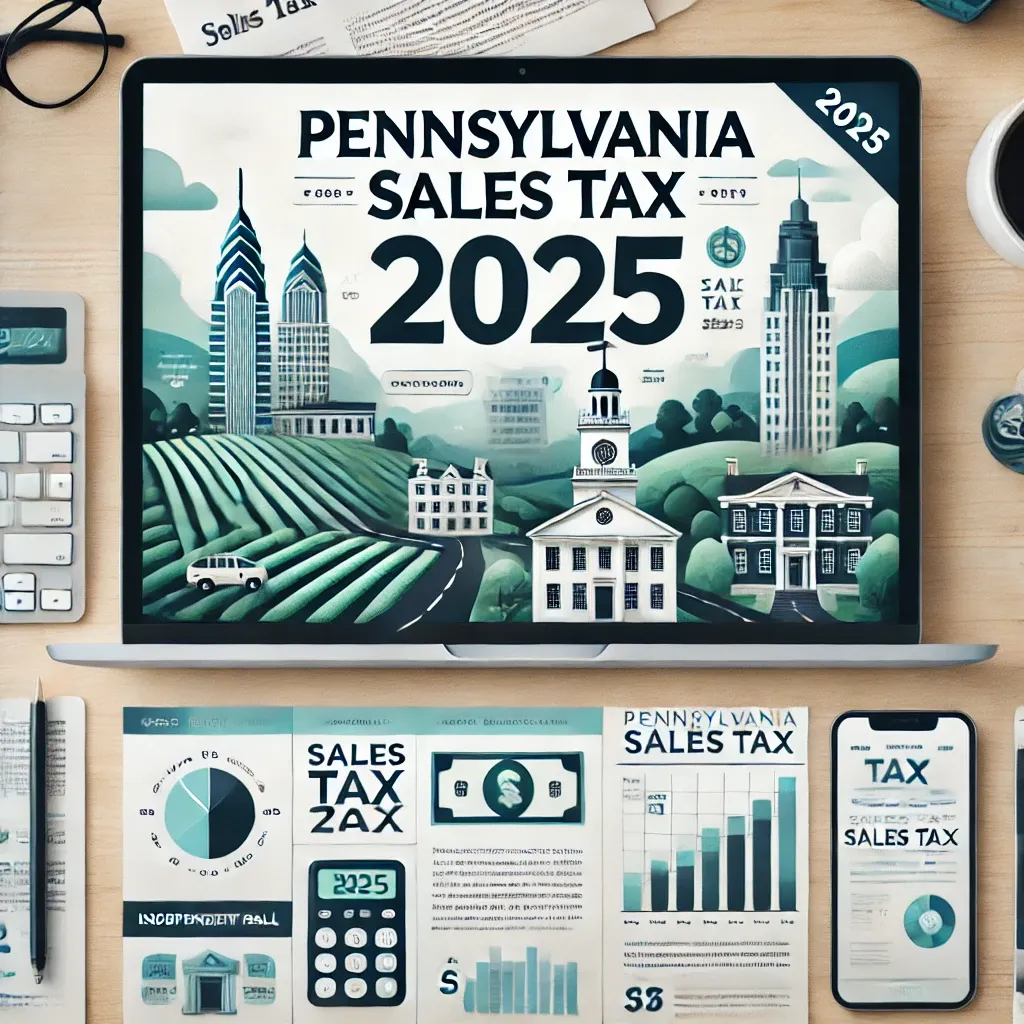

Pennsylvania Sales Tax: 2025 Overview
Sales tax in Pennsylvania is a 6% statewide rate in 2025, with additional local taxes of 2% in Philadelphia and 1% in Allegheny County, bringing the maximum rate to 8%. Pennsylvania does not participate in the Streamlined Sales Tax initiative (SSUTA), but its exemptions for groceries, most clothing, and prescription medications simplify compliance for businesses.
With limited local variations, Pennsylvania’s sales tax system is relatively straightforward.
Pennsylvania Sales Tax Due Date
In Pennsylvania, the due dates for paying sales taxes depend on your assigned filing frequency, which is determined by your total taxable sales and tax liability.
Filing Frequency | Criteria | Due Date |
|---|---|---|
Monthly | Required for businesses collecting more than $600 in sales tax per month. | Due on the 20th of the following month. |
Quarterly | For businesses collecting $75–$600 in sales tax per month. | Due on the 20th of the month following the quarter (e.g., April 20 for Q1). |
Semi-Annual | For businesses collecting $25–$75 in sales tax per month. | Due on June 20 and December 20 each year. |
Annually | For businesses collecting less than $25 in sales tax per month. | Due on January 20 of the following year. |
Key Notes
If the due date falls on a weekend or holiday, payments are typically due on the next business day.
Late filings or payments may result in penalties and interest, so timely compliance is essential.
Payments and filings can be completed through the Pennsylvania myPATH Portal.
Pennsylvania Sales Tax Rate in 2025
Pennsylvania imposes a statewide sales tax of 6%, with additional local taxes in certain areas, bringing the combined rate up to 8% in specific jurisdictions.
Tax Type | Rate | Description |
|---|---|---|
State Sales Tax | 6% | Applies to most retail sales of tangible personal property and certain services. |
Local Sales Tax | Varies by Location | Additional sales tax imposed in certain areas, such as Philadelphia (2%) and Allegheny County (1%). |
Notes
Pennsylvania exempts groceries, prescription medications, and most clothing from sales tax.
The total sales tax rate depends on the location of the transaction, combining state and local rates.
2025 Pennsylvania Local Sales Tax Rates Table
Below is a table highlighting some of the largest cities in Pennsylvania along with their respective local and combined sales tax rates:
City | Local Sales Tax Rate | Total Sales Tax Rate |
|---|---|---|
Erie | None | 6.0% |
Harrisburg | None | 6.0% |
Lancaster | None | 6.0% |
Philadelphia | 2.0% | 8.0% |
Pittsburgh | None | 6.0% |
Reading | None | 6.0% |
Scranton | None | 6.0% |
State College | None | 6.0% |
Wilkes-Barre | None | 6.0% |
Notes
Pennsylvania’s statewide sales tax is 6.0%, with Philadelphia imposing an additional 2% local tax, bringing its total to 8.0%.
Groceries, most clothing, prescription medications, and certain services are exempt from sales tax.
Rates are consistent across most cities except for areas with additional local taxes, such as Philadelphia.
For detailed and up-to-date information, visit the Pennsylvania Department of Revenue.
For city-based tax rates in Pennsylvania, visit our Pennsylvania Local Sales Tax Directory and search for your city.
Pennsylvania Sales Tax Calculator Example with Customers in Multiple Locations
An online retailer based in New Jersey establishes economic nexus in Pennsylvania by exceeding $100,000 in annual sales, requiring them to collect and remit sales tax for purchases made by Pennsylvania residents. The retailer makes sales to customers in multiple locations, each with different local tax rates.
Detail | Description |
|---|---|
Business | Online retailer based in New Jersey with economic nexus in Pennsylvania. |
Customer Purchases | Customer A in Philadelphia $1,200 total, $800 taxable, $400 exempt (e.g., groceries or medications). Customer B in Pittsburgh $900 total, $600 taxable, $300 exempt. Customer C in Harrisburg $500 total, $400 taxable, $100 exempt. |
Customer Locations | Philadelphia 8.0% total sales tax. Pittsburgh 7.0% total sales tax. Harrisburg 6.0% total sales tax. |
Pennsylvania Sales Tax Calculations
Customer | Taxable Amount | Total Tax Rate | Total Tax Due |
|---|---|---|---|
Customer A | $800 | $800 × 8.0% = $64.00 | $64.00 |
Customer B | $600 | $600 × 7.0% = $42.00 | $42.00 |
Customer C | $400 | $400 × 6.0% = $24.00 | $24.00 |
Total Sales Tax Due in Pennsylvania
$64.00 (Customer A) + $42.00 (Customer B) + $24.00 (Customer C) = $130.00
Key Considerations for Businesses
Location Accuracy: Use precise customer addresses to apply the correct local tax rates. For example, Philadelphia and Pittsburgh have higher rates than the state’s base rate of 6.0%.
Exemption Management: Properly classify exempt items such as groceries, prescription medications, and most clothing, ensuring accurate documentation.
Tax Reporting: Track taxable and exempt sales by location for accurate reporting and timely filing through the Pennsylvania Department of Revenue’s myPATH portal.
Kintsugi Intelligence automates location-based tax rate application, exemption management, and accurate reporting across all your one-click integrations to ERP, HR, and eCommerce systems like Shopify, BigCommerce, Amazon, Quickbooks, and Rippling.
Is there a Pennsylvania SaaS sales tax?
Yes, Pennsylvania imposes sales tax on Software as a Service (SaaS) as it is generally classified as taxable tangible personal property.
Category | Details | Examples |
|---|---|---|
Taxable SaaS | SaaS is taxable under Pennsylvania’s 6% state sales tax, plus additional local taxes in certain areas (e.g., Philadelphia: 2%, Allegheny County: 1%). | Cloud-based accounting software, CRM tools. |
Non-Taxable SaaS | Custom software or services incidental to the SaaS product may be exempt, depending on the nature of the transaction. | Custom software solutions. |
Requirements for Businesses | SaaS providers with nexus in Pennsylvania must collect and remit sales tax for taxable transactions. | Out-of-state providers meeting nexus thresholds. |
Additional Considerations
Pennsylvania classifies SaaS under its tax code for prewritten software accessed electronically.
Businesses can streamline compliance by getting started with Kintsugi for sales tax automation, ensuring accurate tax calculations and filings.
For further guidance, consult the Pennsylvania Department of Revenue or a tax professional.
Is there sales tax on clothing in Pennsylvania?
Yes, Pennsylvania exempts most clothing from sales tax, but there are exceptions for certain items:
Category | Details |
|---|---|
Exempt Clothing | Most clothing and footwear items are exempt from Pennsylvania’s 6% state sales tax. |
Taxable Items | Certain clothing items, such as formal wear, athletic gear, and accessories, are subject to sales tax. |
Local Sales Taxes | Additional local sales taxes may apply in specific jurisdictions, such as Philadelphia (2%) and Allegheny County (1%). |
FAQs
What is the sales tax rate for Pennsylvania?
Pennsylvania imposes a 6% statewide sales tax, with additional local taxes of 2% in Philadelphia and 1% in Allegheny County.
How do you calculate Pennsylvania sales tax?
Multiply the taxable amount by the 6% state rate and add applicable local taxes for transactions in Philadelphia or Allegheny County.
Sales Tax Nexus in Pennsylvania
Sales tax nexus in Pennsylvania establishes a business's obligation to collect and remit sales tax, triggered by physical presence, economic activity, or relationships with in-state entities.
Type of Nexus | Description | Threshold/Criteria |
|---|---|---|
Physical Nexus | Created by having a physical presence in Pennsylvania, such as a location, employees, or inventory. | Office, warehouse, storefront, or employees operating in Pennsylvania. |
Economic Nexus | Triggered by making substantial sales into Pennsylvania, even without a physical presence. | More than $100,000 in gross sales annually in the state. |
Affiliate Nexus | Created through relationships with in-state businesses that help facilitate sales. | A Pennsylvania-based affiliate promotes or sells products for the out-of-state retailer. |
Marketplace Nexus | Applies to sales made through marketplace facilitators operating in Pennsylvania. | Facilitators must collect and remit sales tax on behalf of sellers. |
Click-Through Nexus | Established through online referrals by Pennsylvania-based individuals or businesses. | Sales exceed $10,000 annually from Pennsylvania-based referrals. |
Inventory Nexus | Triggered by storing inventory in Pennsylvania, even if through a third party (e.g., warehouses). | Any physical inventory located in Pennsylvania. |
Employee or Agent Nexus | Having employees, independent contractors, or agents perform services in Pennsylvania. | Sales or service activities conducted by representatives in Pennsylvania. |
Notes
Pennsylvania uses both physical presence and economic presence to determine sales tax nexus.
Businesses with nexus in Pennsylvania must register for a sales tax permit and collect sales tax on taxable sales.
Marketplace facilitators are responsible for collecting and remitting sales tax for third-party sales made through their platforms.
FAQs
What is the sales tax nexus in Pennsylvania?
Sales tax nexus in Pennsylvania is established through physical presence or economic nexus, triggered by exceeding $100,000 in annual sales into the state.
Pennsylvania Sales Tax Exemptions in 2025
In 2025, Pennsylvania maintains its 6% state sales tax, with exemptions for groceries, most clothing, prescription medications, and certain medical devices.
What is a Pennsylvania state tax-exempt certificate?
A Pennsylvania exemption certificate, also known as Form REV-1220, is a document that allows eligible buyers to make tax-exempt purchases in Pennsylvania. It certifies that the buyer qualifies for an exemption under Pennsylvania sales tax law.
Purpose: Used for transactions exempt from sales tax, such as purchases by government agencies, nonprofit organizations, or for resale purposes.
Usage: The buyer provides the certificate to the seller at the time of purchase to avoid paying sales tax.
Retention: Sellers must keep a copy of the certificate on file to validate tax-exempt transactions in case of an audit.
Valid Reasons for Exemption
Exemption Category | Description | Examples |
|---|---|---|
Resale | Items purchased for resale. | Products bought by retailers for inventory. |
Manufacturing | Materials or equipment used directly in production. | Machinery, raw materials, and production tools. |
Nonprofit Organizations | Tax-exempt entities making qualified purchases. | Purchases by charitable or educational organizations. |
Government Agencies | Federal, state, or local government entities. | Supplies or equipment bought by government offices. |
Agricultural Use | Equipment and supplies used exclusively in farming. | Tractors, fertilizers, and feed. |
What is exempt from sales tax in Pennsylvania?
Over 80% of Pennsylvania businesses rely on tax exemptions to manage costs and ensure compliance. This table outlines key Pennsylvania sales tax exemptions to help businesses operate efficiently:
Category | Exempt Items |
|---|---|
Essential Goods | Prescription and over-the-counter drugs, medical equipment, and most groceries. |
Nonprofit Organizations | Purchases by qualifying charitable, religious, and educational organizations. |
Government Entities | Transactions made by federal, state, and local government agencies. |
Agricultural Products | Seeds, fertilizers, pesticides, and machinery used directly in farming. |
Manufacturing | Machinery, tools, and supplies used directly in manufacturing or processing. |
Resale | Items purchased for resale are exempt with valid resale documentation. |
Educational Materials | Textbooks and supplies purchased for school or university use. |
Occasional Sales | Casual or isolated sales by individuals not engaged in regular business activities. |
Additional Notes
Pennsylvania applies a reduced sales tax rate of 1% for certain goods in Philadelphia and Allegheny County, in addition to the state rate of 6%.
Exemptions for manufacturing and agricultural items often require an exemption certificate.
Pennsylvania Sales Tax Permits, Registration, and Filing in 2025
This section simplifies obtaining permits, filing returns, and meeting payment deadlines effectively for businesses with buyers in Pennsylvania.
How do I get a Pennsylvania sales tax permit?
To obtain a sales tax permit in Pennsylvania, follow these steps:
Register Online: Visit the myPATH Portal to start your registration for a sales tax license.
Provide Business Details: Submit information such as your business name, address, type of business entity, and federal EIN or Social Security number.
Pay the Registration Fee: Pennsylvania does not charge a fee for obtaining a sales tax license.
Receive Your Permit: Once approved, you'll receive a Pennsylvania Sales, Use, and Hotel Occupancy Tax License, which allows you to collect and remit sales tax.
Note: Pennsylvania requires businesses with physical or economic nexus to register for a sales tax license before collecting sales tax.
How do I submit a Pennsylvania sales tax registration?
To register for Pennsylvania sales tax, follow these steps. Pennsylvania also offers customer support for registration through the Pennsylvania Department of Revenue at (717) 787-1064.
Determine if You Need to Register
You must register for Pennsylvania sales tax if your business:
Has a physical presence (nexus) in Pennsylvania (e.g., office, warehouse, employees).
Meets economic nexus thresholds by making over $100,000 in gross sales annually into Pennsylvania.
Gather Required Information
Before starting, ensure you have:
Business Information: Legal name, DBA (if applicable), federal EIN or SSN.
Address Details: Physical and mailing addresses.
Business Type: LLC, sole proprietorship, corporation, etc.
Sales Estimates: Estimated taxable sales in Pennsylvania.
Bank Account Information: For filing and payment setup.
Register Online
Visit the Pennsylvania Department of Revenue website.
Create an account or log in to the e-TIDES or myPATH portal.
Select Register a New Business and follow the prompts to complete your sales tax registration.
Submit Application
Review the form for accuracy before submitting.
Once approved, you will receive a Pennsylvania Sales, Use, and Hotel Occupancy Tax License, which allows you to collect and remit sales tax.
Begin Collecting and Filing Sales Tax
Start collecting Pennsylvania sales tax on taxable transactions.
File and remit collected sales tax through the myPATH portal based on your assigned filing frequency (monthly, quarterly, or annually).
Pennsylvania Sales Tax Filing
This section breaks down Pennsylvania's sales tax requirements, including filing rules, taxable items, and permits.
What are the main Pennsylvania filing requirements?
Pennsylvania sales tax filing requirements depend on the size and frequency of taxable sales:
Filing Frequency: Businesses must file monthly, quarterly, or semiannually based on their total sales tax liability.
Due Date: Returns are due on the 20th of the month following the reporting period.
Filing Method: Returns must be filed electronically through the myPATH portal.
Additional Requirements: Businesses must report all taxable and exempt sales and remit payment for collected taxes by the due date to avoid penalties and interest.
Filing Frequency Criteria
Filing Frequency | Criteria |
|---|---|
Monthly | For businesses collecting $600 or more in sales tax per month. |
Quarterly | For businesses collecting less than $600 in sales tax per month but more than $75 per quarter. |
Semiannually | For businesses collecting $75 or less in sales tax per quarter. |
Note: Pennsylvania requires electronic filing for most businesses. Retailers must report state and local sales taxes, including additional rates for Philadelphia (2%) and Allegheny County (1%). Accurate tracking of taxable and exempt sales is essential for compliance.
What does Pennsylvania sales tax apply to?
Pennsylvania sales tax applies to the following categories, with certain exemptions such as for groceries, most clothing, prescription medications, and medical devices.
Category | Description | Examples |
|---|---|---|
Tangible Personal Property | Most goods, unless exempt. | Furniture, electronics, clothing (if taxable). |
Taxable Services | Certain services are subject to sales tax. | Amusements, building cleaning, some repairs. |
Digital Goods | Digital products transferred electronically. | Prewritten software, e-books, digital media. |
Leases and Rentals | Rentals of equipment and property. | Equipment rentals, car rentals. |
Prepared Foods | Meals and drinks sold by food service businesses. | Restaurant meals, takeout, catering. |
Note: Pennsylvania imposes a 6% statewide sales tax, with additional local taxes of 2% in Philadelphia and 1% in Allegheny County. Businesses must report and remit both state and local taxes while ensuring compliance with exemptions.
How to file sales tax in Pennsylvania
To file sales tax in Pennsylvania, follow these steps:
Log in to myPATH: Access the myPATH portal using your credentials.
Complete the Sales Tax Return: Enter total taxable sales, exempt sales, and any applicable use tax amounts.
Calculate Tax Due: myPATH automatically calculates the sales tax owed based on your entries.
Submit Payment: Pay electronically through the portal or by other approved methods.
Meet Deadlines: Returns are due by the 20th of the month following the reporting period (monthly, quarterly, or semiannually, depending on your assigned frequency).
Maintain Records: Keep copies of filed returns and payment confirmations for audit purposes.
FAQs
What day is Pennsylvania sales tax due?
Pennsylvania sales tax is due on the 20th of the month following the reporting period for monthly and quarterly filers, or January 20th for annual filers.
Does Pennsylvania have a sales tax holiday?
No, Pennsylvania does not currently offer a sales tax holiday.
Automate Your Pennsylvania Sales Tax with Kintsugi
Managing Pennsylvania sales tax compliance can be complex, from verifying local tax rates to tracking exemptions and meeting filing deadlines. Kintsugi simplifies this process with powerful automation tools designed for modern businesses.
Feature | Description |
|---|---|
Accurate Tax Rate Calculations | Automatically apply the correct state and local sales tax rates based on your customer’s location. |
Exemption Management | Seamlessly identify and apply exemptions for groceries, prescription medications, and other qualifying items. |
Effortless Filing | Streamline your tax reporting and filing process with integrations that calculate, track, and submit sales tax payments. |
ERP and eCommerce Integration | Connect with platforms like Shopify, QuickBooks, Amazon, and more for seamless tax data management. |
Let Kintsugi handle the complexities of Pennsylvania sales tax so you can focus on growing your business. Visit our Product Platform and Pricing pages to learn more and get started today!